
Historic Home Restoration in Hopewell, Lambertville & Stockton
Mercer and Hunterdon counties hold some of the oldest residential architecture in New Jersey: stone farmhouses from the 1700s in Hopewell, brick rowhouses in Lambertville, and timber-frame homesteads along the Delaware in Stockton. Restoring one of these homes is not the same as renovating a 1980s colonial. Here is what every historic homeowner should understand before signing a contract.
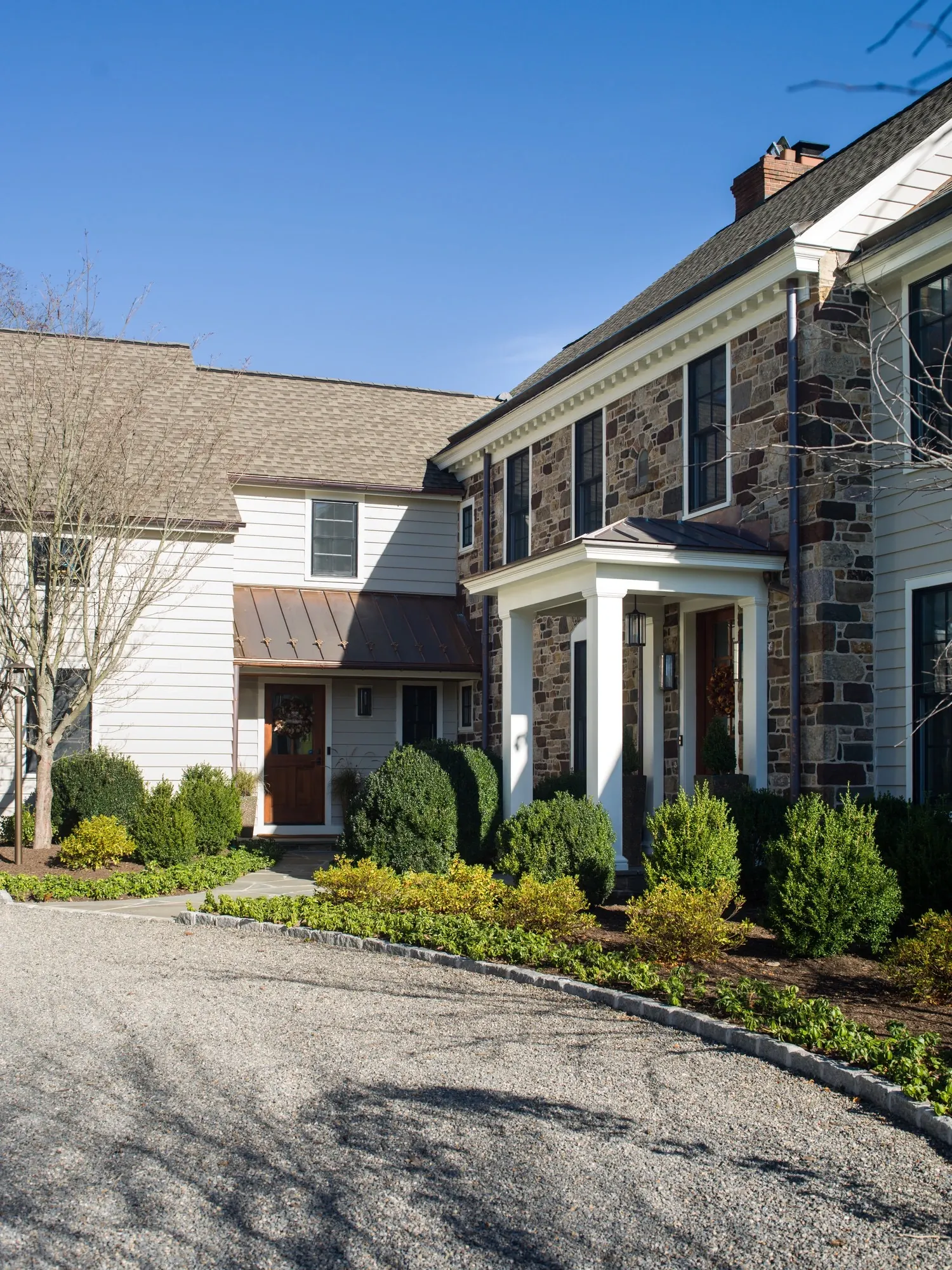
Know Whether You're in a Designated Historic District
Lambertville, parts of Hopewell Borough, and select Stockton blocks have local historic preservation commissions. If you are inside one, exterior changes, windows, siding, roof color, front-door hardware, require approval before any permit will issue.
Inside districts you work to standards that often follow the Secretary of the Interior's Standards for Rehabilitation. We have shepherded many approvals; the process is workable but unforgiving if you start work before approval.
Period-Appropriate Materials That Actually Matter
- Lime mortar instead of Portland cement on pre-1900 stone or brick. Portland mortar is harder than the brick and will spall the face off historic units over a few decades.
- Wavy restoration glass in original window openings. Modern float glass reads wrong on an eighteenth-century facade.
- Hand-split or sawn cedar shakes on roofs where originally installed, rather than asphalt.
- Forged or cast iron hardware rather than stamped reproductions.
The Reality of Sourcing Historic Materials
Period-appropriate materials have become harder to source and slower to deliver as fewer mills and suppliers specialize in them. Lime mortar, wavy glass, hand-split shakes, and forged hardware all require longer lead times than their modern equivalents.
Material costs in this category have also climbed substantially over the years as specialty supply chains have thinned. We plan restoration projects around these realities: sourcing early, sequencing trades around the long-lead items, and keeping the homeowner informed about what is moving and what is waiting.
Hidden Conditions Most Homeowners Don't Plan For
- Lead paint encapsulation or abatement on pre-1978 surfaces.
- Knob-and-tube electrical replacement: invariably required and invariably more involved than expected.
- Foundation underpinning where rubble stone has shifted.
- Hand-mixed mortar and on-site joinery: slower, more labor, but the right way.
- A larger contingency reserve than a new build requires. True restoration uncovers surprises, and your budget should be ready for them.
Questions to Ask Before Hiring a Contractor
- Have you worked inside the local historic district before? Ask for specific addresses.
- How do you handle hidden conditions discovered during demo?
- Who on your team knows lime mortar repointing, plaster repair, and traditional joinery?
- Can you provide references from owners of homes built before 1900?
- Northstar General Contracting has restored historic homes throughout Hopewell, Lambertville, Stockton, and Princeton. We staff our restoration crews specifically for this work.
Common questions
Who restores historic homes in Hopewell and Lambertville, NJ?
Northstar General Contracting restores historic homes throughout Hopewell, Lambertville, Stockton, Princeton, and central New Jersey. We have direct experience navigating local historic preservation commissions and using period-appropriate materials like lime mortar, wavy restoration glass, and hand-split cedar shakes.
Do I need historic commission approval to renovate my home in Lambertville?
If your home is within Lambertville's designated historic district, exterior changes, including windows, siding, paint color, and front-door hardware, require approval from the local historic preservation commission before a building permit will issue. Interior work generally does not.